KnoWhy #855 | June 2, 2026
Why Did the Ammonite King Require the Right Eyes of the People of Jabesh-Gilead Be Gouged Out?
Post contributed by
Scripture Central
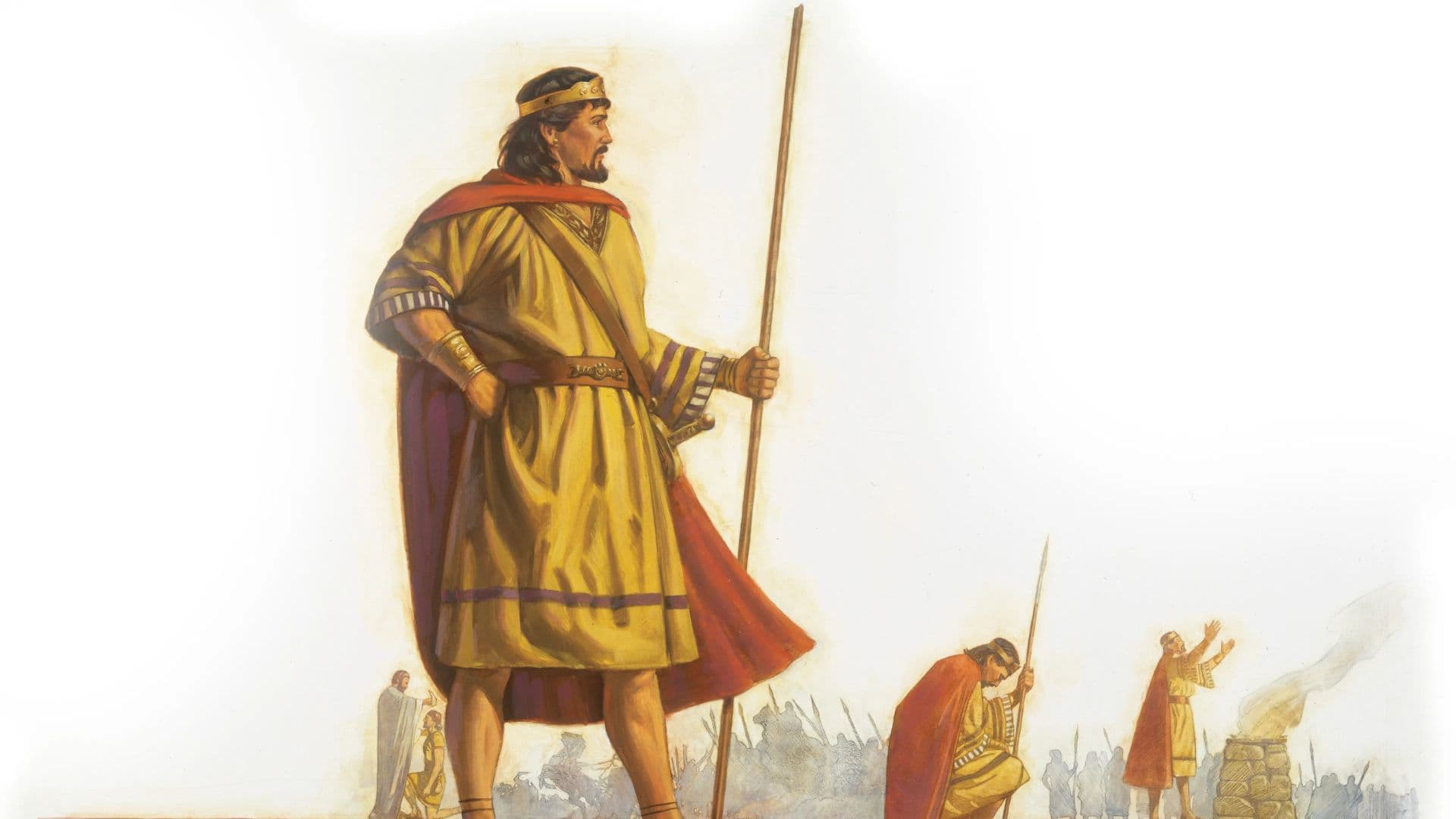
“And Nahash the Ammonite answered them, On this condition will I make a covenant with you, that I may thrust out all your right eyes, and lay it for a reproach upon all Israel.” 1 Samuel 11:2
The Know
1 Samuel 11 records that Nahash, king of the Ammonites, besieged the Israelites at a place called Jabesh-Gilead. To end the conflict, the leaders of the city asked if they could enter a treaty with Nahash, but he would only make peace with them if they would let him put out the right eyes of all the people in the city (1 Samuel 11:1–2). This seems like a strange thing to require; however, the Dead Sea Scrolls help to explain this otherwise inexplicable treaty condition.
A version of 1 Samuel found in the Dead Sea Scrolls contains an extra verse at the end of 1 Samuel 10:
Now Nahash, king of the Ammonites, had been grievously oppressing the Gadites and the Reubenites. He would gouge out the right eye of each of them and would not grant Israel a deliverer. No one was left of the Israelites across the Jordan whose right eye Nahash, king of the Ammonites, had not gouged out. But there were seven thousand men who had escaped from the Ammonites and had entered Jabesh-gilead.1
This extra verse helps make more sense of the condition Nahash required. Nahash had already fought with, defeated, and gouged out the eyes of the people in the other Israelite cities east of the Jordan, but some people had escaped this punishment and taken shelter in Jabesh-Gilead. Apparently, the Ammonites believed that the land Israel was inhabiting was theirs, but the Israelites had won the land when another group who had settled there, the Amorites, attacked the Israelites and lost (see Judges 11:13-25). Nevertheless, Nahash wanted the land and wanted to make sure all the Israelites he defeated suffered the same humiliation. Presumably, this would drive home the point that nobody escapes his justice, and it would ensure the Israelites in that area would be handicapped, discouraging any future uprisings. This would explain the macabre treaty conditions.2
Thankfully, Saul heard about the plight of these Israelites and came to save them, defeating the Ammonites and driving them away (1 Samuel 11:11). Likely because of this, these people never lost their gratitude towards Saul for what he had done for them.3 Years later, the Philistines would kill Saul and hang his body on the walls of Beth-She'an (1 Samuel 31:10). But the people of Jabesh-Gilead would not stand for this. When they heard what had happened to him, “All the valiant men arose, and went all night, and took the body of Saul and the bodies of his sons from the wall of Beth-shan, and came to Jabesh, and burnt them there. And they took their bones, and buried them under a tree at Jabesh, and fasted seven days” (1 Samuel 31:11–13).4 At the peril of their lives, the men of Jabesh-Gilead went into Philistine-controlled territory to bring back the body of the man who saved them, years after he had done so.
The Why
It is hard to imagine the terror and despair of the refugees who had fled to Jabesh-Gilead when Nahash finally appeared before their city and required them to submit to same treatment their family members and friends had gone through. It is similarly difficult to imagine their joy when Saul finally came to save them, apparently on the very day they were going to be mutilated (1 Samuel 11:10-11).
This story is a reminder of the way God works. Sometimes people endure difficulty after difficulty until, at the last minute, God provides relief. When He does so, the gratitude of those who have struggled can last for a lifetime, much like the lifelong gratitude of the people of Jabesh-Gilead.
All people have experienced God’s deliverance, as Christ has saved all people from sin and death through the power of His Atonement. Just as the people who fled to Jabesh-Gilead knew the terrible consequences that could follow if they were brought under the power of the Ammonites, most people know what it is like to be under the power of sin and death and can easily envision how terrible life would be if enslavement to sin and death were permanent. The feelings of gratitude all people could have towards Jesus for saving them could be the same as the feelings of gratitude of the people of Jabesh-Gilead towards Saul for saving them: long-lasting and strong.
Morgan W. Tanner, Old Testament Minute: 1 Samuel, Old Testament Minute, Vol. 9, ed. Taylor Halverson (Book of Mormon Central, 2022).
Frank Moore Cross, Jr. and Robert A. Cloward, “Dead Sea Scrolls,” in Encyclopedia of Mormonism, 4 vols., ed. Daniel H. Ludlow (Macmillan Publishing, 1992), 1:361–364.
Richard G. Ellsworth, “The Tragic Dimensions of Saul,” Ensign 20, no. 6 (June 1990).
- 1. This is taken from the NRSV, and is a translation of 4QSama from Qumran. For more on the Dead Sea Scrolls, see Frank Moore Cross, Jr. and Robert A. Cloward, “Dead Sea Scrolls,” in Encyclopedia of Mormonism, 4 vols., ed. Daniel H. Ludlow (Macmillan Publishing, 1992), 1:361–364.
- 2. For more on this, see Frank Moore Cross, Donald W. Parry, Richard J. Saley and Eugene Ulrich, Qumran Cave 4 – XII, 1-2 Samuel (Discoveries in the Judean Desert Series, XVII) (Clarendon Press, 2005).
- 3. For more on the Saul cycle, see Morgan W. Tanner, Old Testament Minute: 1 Samuel, Old Testament Minute, Vol. 9, ed. Taylor Halverson (Book of Mormon Central, 2022).
- 4. For more on the rise and fall of Saul, see Richard G. Ellsworth, “The Tragic Dimensions of Saul,” Ensign 20, no. 6 (June 1990).